Discipline 101: What’s the Difference Between Punishments and Consequences?
Discipline can be confusing. Many experts argue that we should avoid punishments in favor of consequences. But what exactly is the difference — and why does it matter?
Punishments
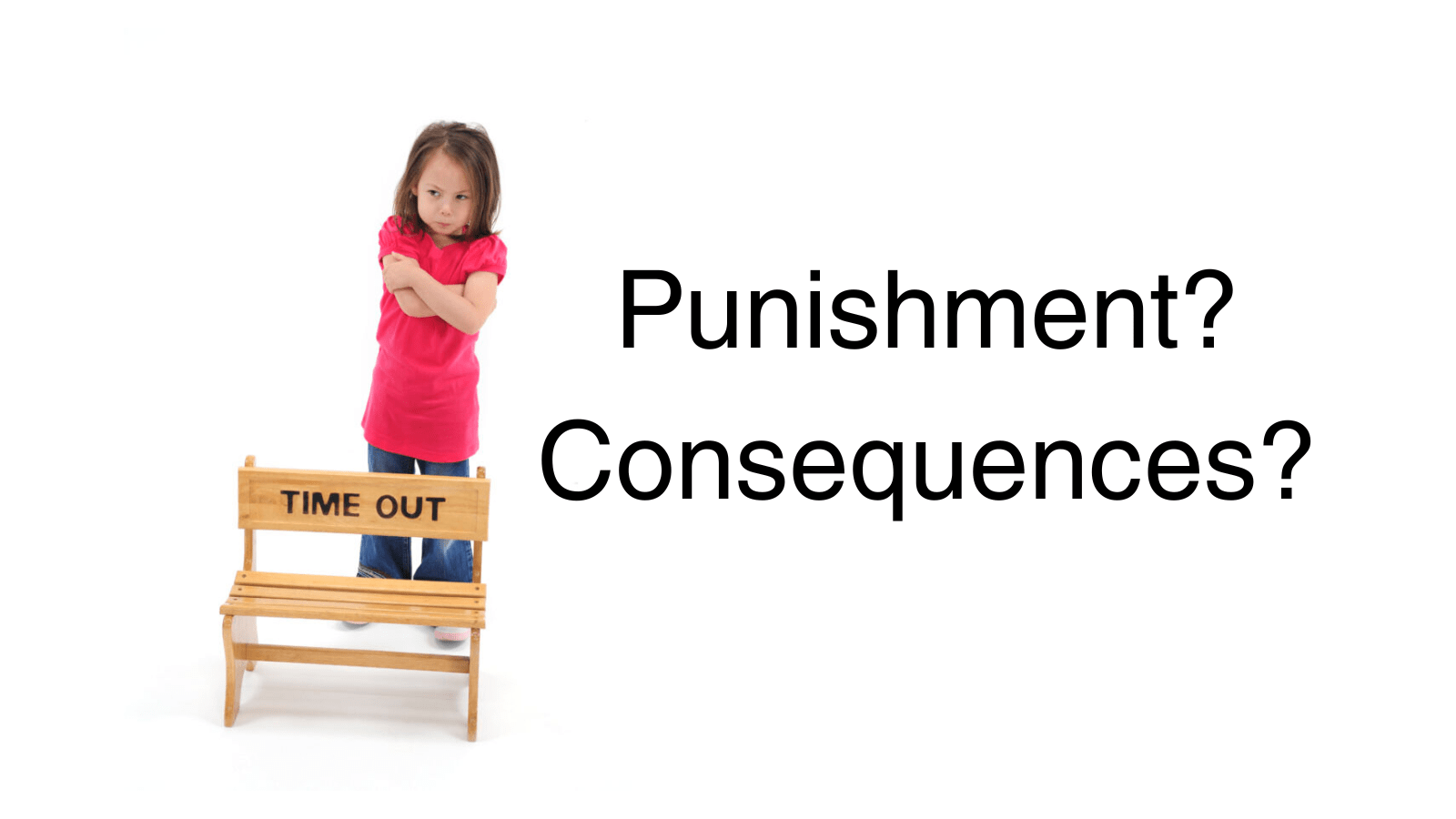
Punishments seek to stop undesirable behavior by causing pain — inflicting something unpleasant (a spanking, writing lines like Bart Simpson) or taking away something pleasurable (no dessert if you don’t eat your vegetables). Common examples include time-outs and cancelled playdates for younger kids, and grounding or loss of phone for older kids.
The threat of punishment aims to make a child less likely to misbehave because he or she wants to avoid the pain. Punishments can be effective in reducing the frequency of problem behaviors if properly applied. But if punishments are so effective, why do we need to concern ourselves with consequences? Because there are several serious problems with relying on them.
- Punishments frequently increase misbehavior. While punishments can stop misbehavior in the moment, they can paradoxically increase it in the future. Kids desperately want our passionate attention — even passionate negative attention. When we respond to misbehavior with anger and punishment, our child is actually rewarded for misbehaving. The message becomes: misbehavior is a reliable way to get mom or dad’s attention.
- Punishments don’t teach right from wrong — they teach kids to be sneaky. Punishments make kids feel angry, mistreated, and resentful. Instead of reflecting on their behavior, punished children focus on how they’ve been treated unfairly — or how to get even. Rather than building moral values, punishments teach children to misbehave without getting caught.
- Punishments don’t teach skills. Even when effective, punishments only teach children what not to do — not what to do instead. The word “discipline” literally means “to teach.” Our job as parents is to teach our children the skills they need to have happy, successful, respectful lives. Punishments don’t teach any positive skills or behaviors.
- Punishments pit parents and children against each other. Punishments harm the parent-child relationship. They cause resentment and erode trust. Rather than being on the same team facing life’s challenges together, punishments put parents and children on opposite sides of a struggle over who controls the child’s behavior.
Consequences
Because of these inherent problems, child development experts like Rudolf Dreikurs and Haim Ginott began discouraging parents from using punishments. Both emphasized addressing the causes of misbehavior rather than punishing it after the fact. However, they did feel it’s important for children to experience the consequences of their behavior: “If I do this, then that consequence will occur.”
Natural consequences occur without parental intervention. If a child has a tantrum and smashes his favorite toy, the toy breaks — the parents didn’t need to do anything. Other natural consequences include getting bad grades for not doing homework, or detention for misbehaving at school. When a natural consequence occurs, parents can be on the child’s side, helping him deal with it rather than being the source of his pain.
According to Dreikurs and Ginott, parents should not shield children from natural consequences, but should offer “empathy and encouragement” as the child deals with them. The exception: if the consequence would endanger the child or another person, or if the child lacks the skills or foresight to handle the situation, a parent needs to step in.
Logical consequences result from parental intervention and are logically connected to the misbehavior. A teen who misuses his phone faces the logical consequence of losing phone privileges. Losing the phone for fighting with a sibling is not a logical consequence — the misbehavior and the consequence aren’t connected. While logical consequences can be effective, they frequently fall prey to the same problems as other punishments.
Guidelines for Using Consequences
When using logical consequences, follow Jane Nelson’s “Four R’s”:
- Related — the consequence should be related to the misbehavior.
- Respectful — administered without anger, shame, blame, or lectures.
- Reasonable — must not be seen as harsh by parent or child.
- Revealed in advance — established beforehand so both parent and child know what to expect. The most effective consequences are created with input from children.
Whenever possible, look for alternatives to consequences altogether — like collaborative problem solving, or using a reward chart to teach positive behaviors rather than punishing negative ones.
The meaning of the word “discipline” is “to teach.” Our job as parents is to teach our children the skills they need to have happy, successful, respectful lives.
Child psychologist with over 30 years of experience working with challenging boys and their families. Author of Challenging Boys: A Proven Plan for Keeping Your Cool and Helping Your Son Thrive (Rowman & Littlefield, 2025) and a former firefighter.
Get the tools to stay calm when it matters most.
Download the first chapter of Challenging Boys free